Walk into any buzzing Bangalore mall on a Saturday evening—Phoenix Marketcity in Whitefield, Orion Mall at Brigade Gateway, or Forum Mall in Koramangala—and you will notice one thing immediately. It isn’t just the shiny floors or the air-conditioning. It’s the pull of the brands. Zara, H&M, PVR, Starbucks, IKEA. These names don’t just fill square feet; they create gravity. And that gravity, in today’s mall revival wave, is the only thing standing between a property that prints rental income and one that slowly becomes a white elephant.
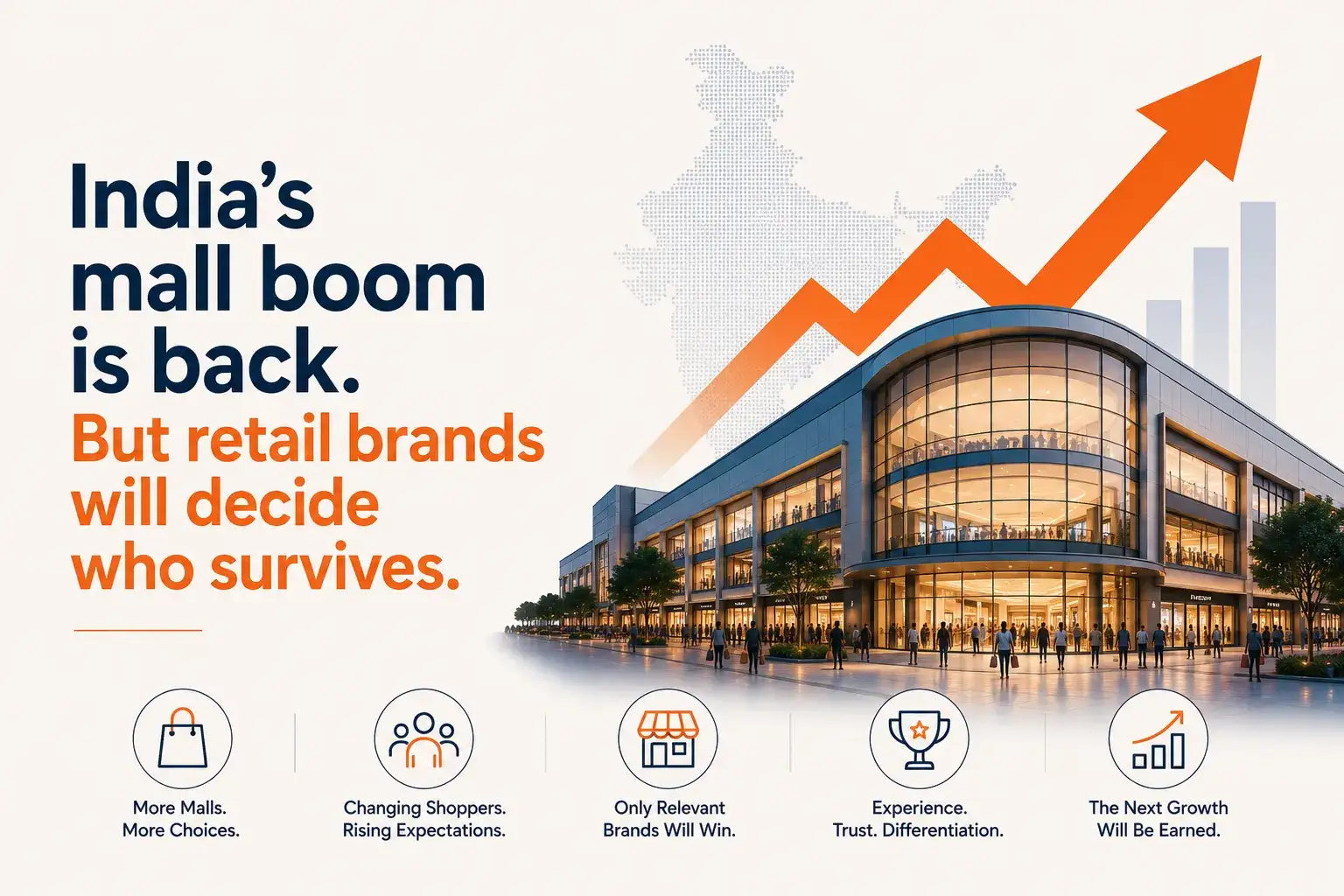
India’s mall sector is undeniably back. After a crippling pandemic lull, footfalls have recovered beyond pre-2020 levels. The top seven cities absorbed over 3.5 million square feet of fresh retail space in the first half of 2024 alone—Bangalore accounting for nearly a quarter of that leasing, according to recent market reports. The pipeline looks even bigger. But while the macro narrative screams “boom,” the micro reality is far more selective. Malls that treat real estate as a mere container for shops are failing. Those that act as curators of a brand ecosystem are thriving. The difference is stark, especially in a city like Bangalore, where retail consumption habits are rewriting the rulebook every six months.
For investors, retailers, and commercial land owners, this creates a unique moment. The opportunity is massive—but only if you know which side of the survival line a mall stands on. And that line is drawn entirely by the retail brands who choose to stay, expand, or walk away.
At Skyline Estates, we’ve been designing and leasing retail destinations for over two decades. The lesson we keep learning is that a mall isn’t a building that houses brands—it’s a brand platform that happens to be a building.
Why the “Brand Factor” Now Outweighs Location and Design
Ten years ago, a mall’s success formula looked like this: excellent location + ample parking + a multiplex. Today, that formula is incomplete. Good locations still matter, but they no longer guarantee survival. Bangalore has several malls sitting on prime arterial roads that remain half-empty despite foot traffic outside. The missing ingredient? A tenant mix that consumers actively seek out.
The Anchor Tenant Effect Has Evolved
Anchors used to mean a big-box department store or a cinema. Now, anchors are experience engines. A PVR Superplex doesn’t just bring ticket buyers; it keeps people in the mall for three hours, feeding F&B and impulse fashion purchases. A Decathlon pulls fitness-conscious families who then explore the food court. A well-curated beauty and athleisure floor—NYKAA, Sephora, Nike—creates a destination that high-street retail can’t replicate. The anchor is no longer a single store; it’s a choreographed mix of category leaders that reinforce each other.
Brands Are No Longer Just Tenants—They Are Co-Investors in Footfall
Leading retail chains now analyse mall trade areas with the same rigour as a real estate developer. They look at catchment demographics, nearby office density, metro connectivity, and even weekend versus weekday traffic patterns before signing a lease. When a Zara or an Apple Premium Reseller commits to a mall, it sends a signal to the entire market. Other brands follow. That clustering effect is what turns a new property into a thriving retail centre within two quarters, rather than five years. Without it, leasing velocity stalls, vacancies creep up, and rental yields compress.
This is why we now design our mall projects backwards—starting with the brand wish list, then shaping the floor plates, column grids, and even the vertical circulation to match the requirements of top-tier retailers. If the brand isn’t excited, the consumer won’t be either.
Our recently launched Skyline Galleria in Yelahanka was master-planned with a pre-committed mix of five international anchor brands before a single pile was driven. That early brand confidence cascaded into 70% pre-leasing within nine months. It’s a strategy we believe every new mall in Bangalore must adopt.
Bangalore’s Mall Landscape: Who Wins, Who Withers
Bangalore is both the best and the most unforgiving retail market in India. The city’s shoppers are notoriously value-conscious yet aspirational. They are also spoilt for choice—within a 10-kilometre radius in East Bangalore, you can find three operational malls and two under construction. The winners in this clutter aren’t necessarily the oldest or the largest; they are the ones that made brand curation their operational religion.
Lessons from the Survivors
Look at Phoenix Marketcity Whitefield. It didn’t just assemble a big box—it negotiated exclusive launches, curated a luxury wing, and continuously rotated pop-up concepts. The result? Despite new competition, its gross rental revenue per square foot remains among the highest in the city. In contrast, several malls that opened with generic tenant mixes in the same period have seen anchor exits and are now repositioning as “community centres” with office conversions—a clear sign of diminished retail ambition.
The North Bangalore Opportunity and Risk
North Bangalore—Yelahanka, Devanahalli, and the aerospace corridor—is currently the most hyped retail growth frontier. With the airport as a catalyst, IT parks multiplying, and residential catchments densifying, the demand for organised retail is real. But here’s the catch: building a mall in North Bangalore without a firm brand-led strategy is like launching an airline without a code-share partner. The catchment is affluent, but it’s also fragmented. Only a mall that brings brands these consumers currently drive 45 minutes to Whitefield for will capture their loyalty. Generic retail will be ignored.
Our team’s research on the Yelahanka-Devanahalli belt shows that 68% of surveyed families currently travel to central or east Bangalore for branded shopping and entertainment. That’s leakage a well-anchored mall can plug—but only if the brand mix is genuinely destination-worthy from day one.
If you are evaluating retail space in this corridor, download our detailed investment outlook for yield projections and leasing benchmarks.
Investment Insight: How Brand Quality Translates into Cap Rates and Yields
For investors buying strata retail units or developers holding income-producing assets, the link between retail brand strength and financial performance is no longer theoretical—it’s spreadsheet math.
Rental Yield Differentials Are Widening
In Bangalore, a strata shop in a mall with strong national and international anchors can command net rental yields of 7% to 9%, with consistent 4% to 5% annual escalations. The same square footage in a mall with weak or constantly churning tenants often struggles to cross 4% to 5% yields—and carries higher vacancy risk. Brands are essentially underwriting your rental cheque. When a mall’s occupancy is driven by a handful of large, credit-rated retail chains, the rental cash flow becomes far more predictable. Institutional investors have noticed this: cap rate compression for dominant malls is real, and transaction evidence from 2023–24 shows premium valuations for properties where top-10 tenants contribute over 60% of revenue.
Capital Appreciation Follows Brand Stability, Not Just Footfall
Footfall is a vanity metric if it doesn’t convert. Malls filled with browsers but no buyers see shop prices stagnate. True capital appreciation of 6% to 8% annually happens when a mall becomes the habitual shopping destination for its catchment—and that habit is formed by a critical mass of must-visit brands. When that tipping point is reached, the property’s investment-grade status gets re-rated, and exit multiples expand. Our analysis of Bangalore transactions shows that units in malls that retained their anchor mix for five years appreciated nearly 1.8 times faster than those with high tenant turnover.
Turn Brand Strength into Investment Clarity
Whether you are looking to lease a flagship store or acquire strata retail space, the mall’s tenant blueprint is your most critical due diligence document. Speak to our retail advisory team for a brand-mix analysis of upcoming Bangalore malls and a realistic rental yield projection.
Book a ConsultationWhat Retailers Want—and How Developers Must Adapt
The balance of power has shifted. Until the mid-2010s, developers dictated lease terms, and brands queued up. Today, a top-tier retailer will walk away from a project if it isn’t convinced about the catchment, the mall’s marketing commitment, and the developer’s track record in sustaining footfall. This means developers need to approach leasing as a strategic partnership, not a space-filling exercise.
Designing for Experience, Not Just Commerce
Brands are demanding double-height storefronts, dedicated loading docks, dust-free common areas, and—critically—events-ready central atriums. They want malls that act as community hubs, hosting weekend markets, pet-friendly zones, and live music. In response, Skyline Estates has integrated an adaptable central plaza in all new mall designs, complete with a programmable fountain and pop-up infrastructure, so that the mall behaves like a public square. This experiential layer is what convinces a lifestyle brand to sign a 12-year lease rather than a 3-year one.
The OMNI-Channel Hybrid: Why Online-First Brands Are Now Chasing Physical Space
One of the most underappreciated tailwinds for mall leasing is the entry of digital-native brands into brick-and-mortar. D2C labels in fashion, beauty, and even furniture are actively seeking 500 to 1,500 sq. ft. shop-in-shop or inline spaces in well-curated malls. They bring a new customer base that is already loyal online, and they often pay a slight premium for the right adjacency to compatible anchors. This trend is particularly vibrant in Bangalore, given the city’s strong startup ecosystem. A mall that can offer flexible tenure and turnkey fit-out options to these brands gains a valuable, trend-forward differentiator.
Where Do We Go from Here? A Bangalore Developer’s View
The mall boom is real, but it’s a boom that will refine, not inflate, the market indiscriminately. Over the next three to five years, Bangalore will see a clear bifurcation: brand-anchored super-malls with 95%+ occupancy, and a long tail of underperforming centres that will convert to hybrid use. The point of no return for many properties happens at the leasing stage, when the developer either commits to a brand-led approach or defaults to filling space with low-credit local retailers just to show occupancy.
For investors, the takeaway is unambiguous: evaluate a mall investment not by the quality of the marble but by the stability and desirability of its tenant roster. For retailers, it’s about partnering with developers who understand that a lease is a profit-sharing arrangement, not a rental extraction exercise. And for us, as a developer that has built, leased, and managed over two million square feet of retail in South India, the path forward is to build malls the way brands build their flagship stores—obsessing over every customer touchpoint.
Frequently Asked Questions
Why are malls making a comeback in India after the pandemic?
Organised retail in India was under-penetrated even before COVID. The pandemic accelerated a ‘flight to quality,’ where consumers shifted from unorganised high streets to safe, climate-controlled malls offering a complete leisure experience. Rising disposable incomes, the return to office, and the experiential vacuum in urban life have collectively driven footfall back to pre-pandemic levels and beyond. Malls that offer curated dining, entertainment, and community spaces are now consumption hubs, not just shopping centres.
How do retail brands influence the success or failure of a mall?
Brands act as footfall engines. A mix of strong anchor tenants—multiplex chains, large-format fashion retailers, and experience-based destinations—creates a sustainable pull that benefits all other shops. Conversely, when a mall loses a key anchor, secondary tenants often see 30–40% drops in sales within months, triggering vacancy spirals. Brands also bring credibility, making it easier for the developer to lease remaining space and negotiate better rental terms with other occupiers.
What should an investor look for when buying retail space in a Bangalore mall?
Look beyond square footage and base price. Analyse the tenant mix: who are the top five tenants by revenue contribution, and how long are their leases? Check the developer’s track record in maintaining footfall and common-area standards. Examine the mall’s trade area—office density, residential catchments, and upcoming infrastructure. Finally, study the rental yield trend over the last three years. A mall with stable, category-leading anchors and a developer that actively manages the retail ecosystem is far more likely to deliver consistent returns.
Are Bangalore high streets still a better investment than malls?
It depends on the objective. High streets like Indiranagar 100 Feet Road or Commercial Street offer strong brand visibility and flexible operating hours, often with no common area maintenance charges. However, they lack the controlled environment, guaranteed footfall infrastructure, and curated tenant synergy that a well-managed mall provides. Mall investments generally offer more predictable rental income and better capital appreciation if the asset is institutionally managed. For risk-adjusted returns, dominant malls in supply-constrained micro-markets tend to outperform high streets over a 7–10 year horizon.
How does Skyline Estates ensure strong retail brand partnerships in its mall projects?
We begin leasing discussions at the architectural design stage. Our team actively collaborates with international and national retailers to understand their format requirements, visibility expectations, and space adjacencies. We offer revenue-share structures where appropriate, invest heavily in common-area experiences (events, installations, tech-enabled parking), and maintain a dedicated retail management team post-launch to keep the tenant ecosystem healthy. This integrated approach has helped us secure long-term commitments from leading brands before construction even begins.
Secure Your Space in Bangalore’s Next Retail Landmark
With two new brand-curated mall projects launching in North and East Bangalore, early-mover opportunities are now open for anchor tenants and strata investors. Our leasing team is ready to walk you through the tenant blueprint and shared success model.
Get in Touch